

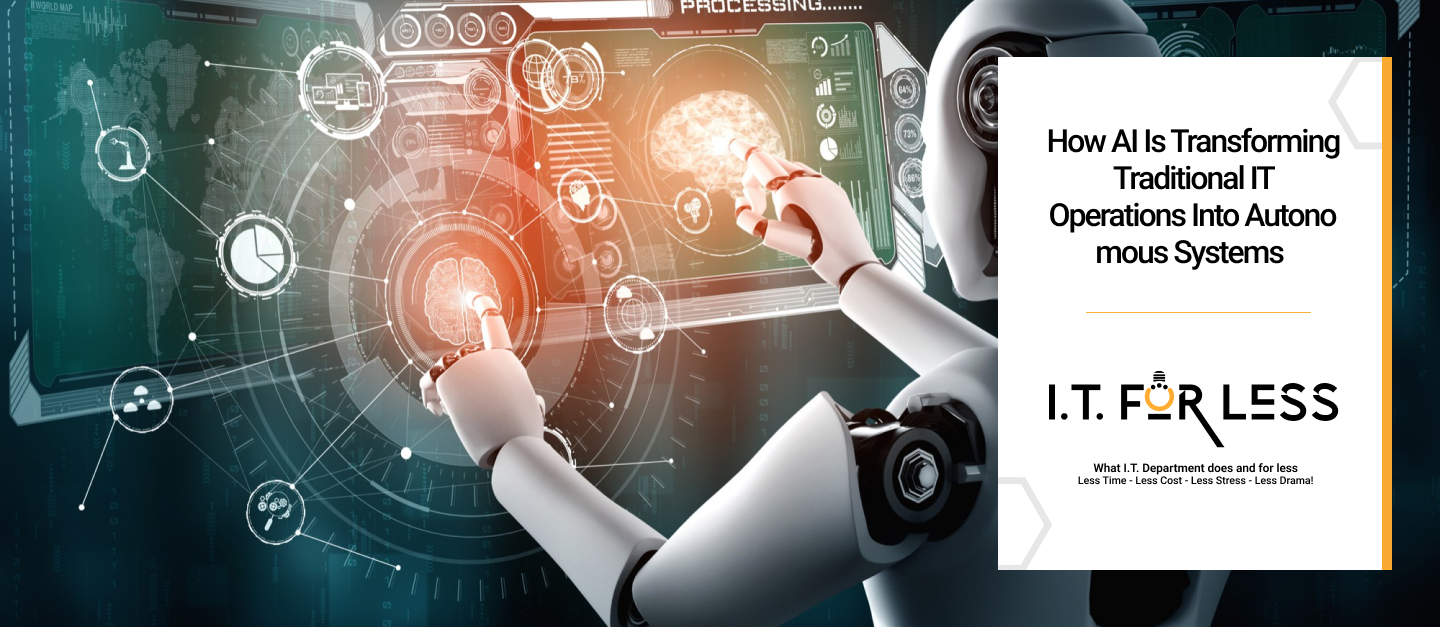
Traditional IT operations were built around manual oversight, static rules, and reactive problem-solving. While this approach supported earlier generations of infrastructure, it struggles to keep pace with today’s hybrid environments, distributed applications, and rising security demands. Artificial intelligence is fundamentally reshaping this model, enabling AI to transform IT operations into autonomous systems that can monitor, analyze, and act with minimal human intervention.
From Manual Monitoring to Intelligent Awareness
Conventional IT monitoring depends on predefined thresholds and human interpretation. AI transforms this by continuously analyzing logs, metrics, events, and user behavior to understand what “normal” looks like across environments. AI-transforming IT operations provide this intelligent awareness, allowing systems to detect anomalies early and respond faster than traditional tools, reducing downtime and operational noise.
Predictive Operations Replace Reactive Response
One of the most significant changes driven by AI is the shift from reactive to predictive operations. AI models identify patterns that signal potential failures, capacity issues, or performance degradation before they impact users. Instead of responding after incidents occur, autonomous systems initiate preventive actions that maintain stability and service quality. AI transforming IT operations makes this predictive capability possible.
Self-Healing Infrastructure Becomes Reality
AI enables infrastructure to correct issues automatically. AI transforming IT operations allows autonomous systems to reroute traffic, restart services, apply patches, or adjust configurations without waiting for manual intervention. These self-healing capabilities improve reliability while freeing IT teams from constant firefighting.
Automation Extends Beyond Tasks to Decision-Making
Traditional automation executes predefined actions, but AI-driven systems support higher-level decision-making. By correlating data across environments and assessing business impact, AI determines the most appropriate response to an issue. This AI transforming IT operations allows these systems to prioritize what matters most and act with greater precision.
Security Evolves Into Continuous, Adaptive Defense
AI-driven IT operations embed security directly into operational workflows. Autonomous systems continuously monitor behavior, detect emerging threats, and respond in real time. This adaptive security model is essential in defending modern environments against increasingly sophisticated cyber attacks.
Human Roles Shift Toward Oversight and Strategy
As IT operations become more autonomous, human roles evolve rather than disappear. IT professionals focus on governance, policy definition, risk management, and strategic innovation. Human oversight ensures accountability while allowing AI to handle complexity at machine speed.
A Gradual Path Toward Full Autonomy
The transition to autonomous IT is not instantaneous. Organizations typically progress from AI-assisted insights to partial automation and, eventually, controlled autonomy. This phased approach ensures trust, stability, and alignment with business goals.
Build Autonomous IT with I.T. For Less
Partner with I.T. For Less to transform traditional IT operations into intelligent, autonomous systems—delivering resilience, efficiency, and future-ready performance.