
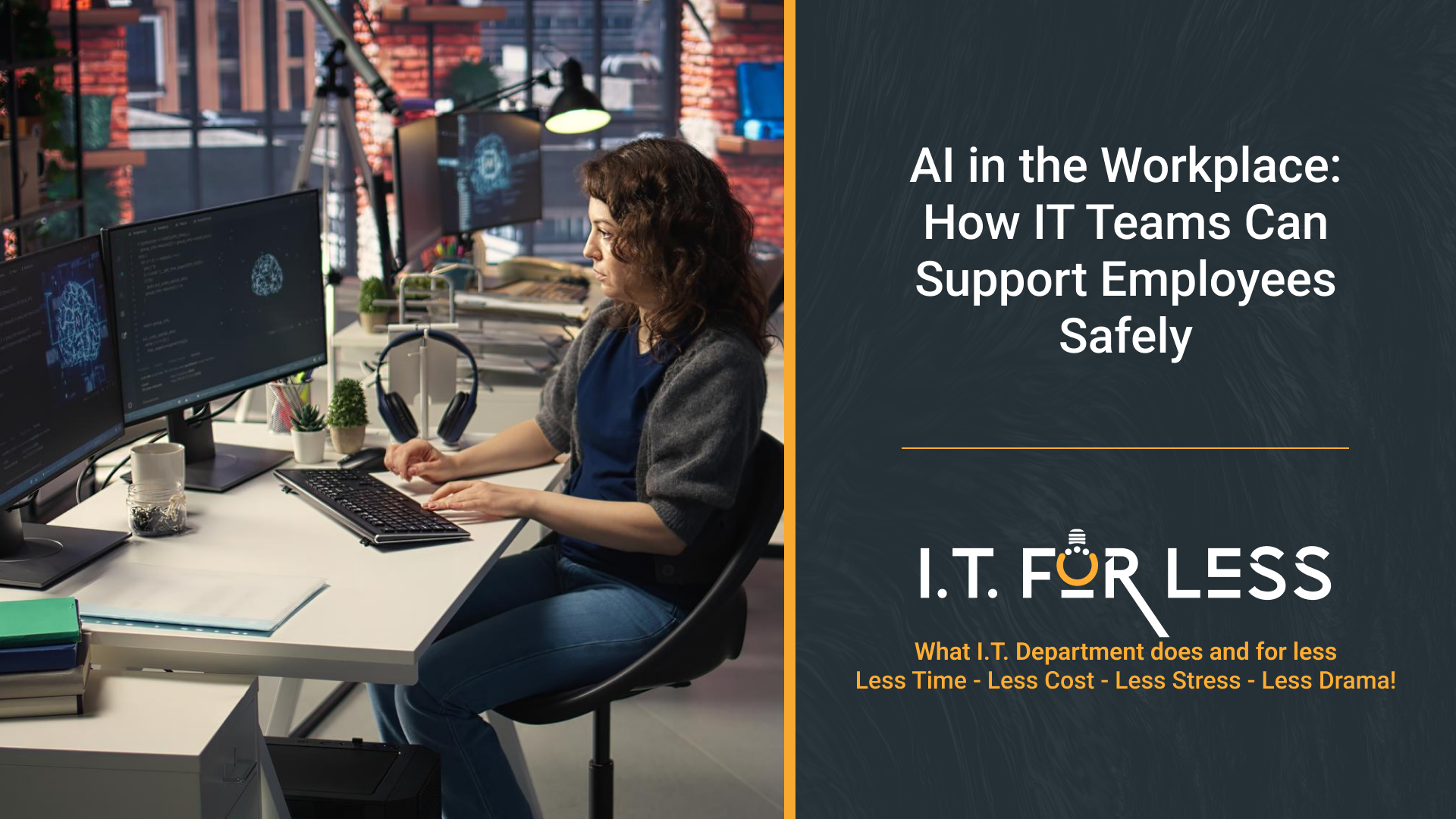

Artificial intelligence (AI) is increasingly becoming part of the modern workplace, powering everything from automated workflows and analytics to virtual assistants and security tools. In many industries, the impact of AI in the workplace IT environments is especially significant. While AI can enhance productivity, collaboration, and decision-making, it also introduces new challenges related to security, privacy, and responsible use.
IT teams are now essential in ensuring AI adoption is both effective and safe, protecting employees and the organization while maximizing the benefits of intelligent technologies. To that end, effective strategies for managing AI in the workplace become a top IT priority.
Understanding the Workplace AI Landscape
AI in the workplace can take many forms: Within most IT departments, adopting workplace AI is now commonplace.
- Virtual assistants that schedule meetings and manage emails
- Chatbots for internal support and employee self-service
- Predictive analytics for performance tracking and operational insights
- AI-driven security tools monitoring networks and devices
While these tools improve efficiency, they also involve access to sensitive data, raise privacy concerns, and require ethical governance. In the workplace IT sector, the introduction of AI often brings important compliance considerations too.
Key Challenges IT Teams Must Address
1. Data Privacy and Security
AI systems rely on data to function effectively. Within the workplace, IT departments must take extra precautions because without proper safeguards, employee information, intellectual property, or operational data could be exposed.
IT responsibilities include:
- Encrypting sensitive data and controlling access
- Monitoring AI systems for misuse or anomalies
- Ensuring compliance with data privacy regulations
2. Bias and Fairness
AI models can unintentionally reflect biases present in their training data, impacting decisions related to hiring, promotions, or performance evaluation. It is crucial for the workplace IT community to mitigate these biases when implementing AI-driven solutions.
IT responsibilities include:
- Implementing oversight on AI algorithms used for HR or decision-making
- Maintaining transparency and documentation on AI model inputs and outputs
- Collaborating with HR and leadership to audit AI decisions regularly
3. User Education and Safe Adoption
Employees must understand how to use AI tools responsibly, recognize potential risks, and follow security protocols. In IT workplaces, providing comprehensive education about responsible AI use is key for positive outcomes.
IT responsibilities include:
- Providing training on AI applications and safe usage
- Offering guidance on recognizing AI-generated phishing or social engineering attempts
- Ensuring employees know reporting channels for suspicious AI behavior
4. Monitoring and Governance
AI systems require continuous oversight to ensure they operate as intended and comply with internal policies. Especially in the area of workplace IT, ongoing monitoring and smart governance are critical to safe AI adoption.
IT responsibilities include:
- Tracking system performance, access logs, and user interactions
- Maintaining audit trails for accountability
- Updating governance policies as AI tools evolve
How Managed IT Services Support Safe AI Adoption
Managed IT service providers (MSPs) can help organizations implement AI safely and efficiently: By leveraging IT expertise, AI can be deployed in workplace environments while meeting strict workplace IT requirements.
- Deploying AI-driven monitoring tools to detect anomalies and potential threats
- Ensuring secure deployment of AI applications across cloud, on-premises, and hybrid environments
- Providing continuous compliance checks and reporting
- Offering employee training and guidance for responsible AI use
By partnering with MSPs, IT teams can focus on strategic initiatives while ensuring AI benefits employees safely and securely. IT departments that balance AI and workplace IT best practices set the stage for long-term organizational success.
Benefits of Safe AI in the Workplace
- Enhanced productivity and automation of repetitive tasks
- Improved decision-making through intelligent insights
- Secure handling of sensitive information
- Increased trust and adoption among employees
Conclusion
AI has the potential to transform the workplace, but its benefits can only be realized when adoption is guided by strong IT governance, security, and ethical oversight. Ultimately, the effective adoption of AI in IT for workplace success depends on thoughtful planning and vigilant support. By proactively supporting employees and managing AI safely, IT teams play a crucial role in driving innovation without introducing unnecessary risk.
I.T. For Less helps organizations deploy and manage AI in the workplace securely, offering managed services that balance innovation, productivity, and safety. Their expertise in workplace IT and AI integration keeps your business up to date with the future of work.